





£7.65
This guidance note is concerned with advice for the safe erection, use and dismantling of temporary suspended chutes intended for the conveyance of waste construction materials. The guidance covers chutes constructed of detachable sections made of metal or non-metallic material, attached to scaffolding.
4 pages
The purpose of this guidance note is to bring together, in one document, some of the more common qualifications used by members. It is not suggested that the list is exhaustive or that the wording of individual clauses is appropriate to each and every similar situation. However, it may serve as a check list for estimators. 10 pages
Other than for very small contracts most contracts of any size have a pre-contract meeting. The primary purpose of the meeting is often for the parties to clarify specific points in the enquiry and quotation. This guidance outlines items to be covered in the meeting, pitfalls and a recommended strategy. 2 pages
Daywork is a method of valuing construction work according to the time spent carrying out work together with the value of the plant and materials resources used. It is an alternative to valuing work by measurement. This guidance outlines when daywork can be charged, how it can be calculated and administration. This guidance is available for pdf download only. 4 pages
This is an instruction manual for managing a project and relies on knowledge, skill and expertise to operate it. The mechanisms have to be understood and complied with. Those intending to subcontract under this form should, as a minimum, obtain and read the form and its associated guidance notes. 8 pages
When in use, scaffold boards are often subjected to harsh conditions and mistreatment and may deteriorate to such an extent that they become unsafe. To ensure that they remain in a safe and serviceable condition, they should be subjected to regular inspections/checks and where necessary repaired/refurbished to ensure that they remain fit for purpose. This document provides guidance on the inspection, care and maintenance of scaffold boards to maximise their operational service life. This guidance is available for pdf download only.
TG20 provides the definitive guidance for scaffolding constructed with tube and fittings throughout the UK. TG20:21 builds on TG20:13, and makes the eGuide software, Design Guide and Operational Guide available via the new NASC ePortal, on a subscription basis. The eGuide produces pdf compliance sheets, which now include more information and an illustration. The guides are fully searchable online. The ePortal is available here from computers, tablets and smart phones via web browsers. Each subscription gives access from multiple machines, but only one machine at a time. Purchase and use of a subscription implies acceptance of the subscription agreement, found here, by all users. The price shown excludes VAT at 20%. If you are renewing an existing TG20:21 subscription please enter the serial number below and press Verify before adding to basket.
This document provides best practice for the use and application of steel and aluminium prefabricated beams. Included is information regarding beam types, uses, joints, handling, transportation and storage. Due to the wide variation of beams available on the market, it has not been possible to include individual load capacities, but information regarding tension and compression chords, correct methods of lacing, bracing and connections to standards and puncheons provides vital information to ensure that beams are correctly installed to support their maximum safe working loads. This guidance is available for pdf download only.
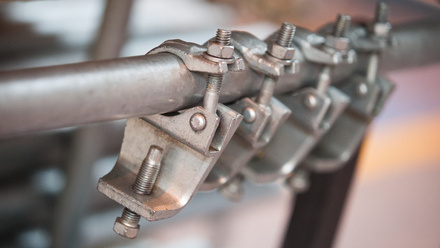
Aluminium tubes, prefabricated beams and other components are widely used throughout the scaffolding industry. Whilst aluminium is not as stiff as steel and will deflect more when subjected to equivalent loads, it is much lighter and provides great advantages with regard to manual handling or the reduction weight. As aluminium couplers are not readily available, aluminium tube and beams are invariably connected with steel couplers and joint pins. Unfortunately, when two dissimilar metals such as aluminium and steel are in contact, a phenomenon known as ‘galvanic corrosion’ can occur where the corrosion of one of the metals, in this case aluminium, can be greatly accelerated. In severe cases this could seriously affect the integrity of the scaffold structure.
Please enter a postcode to search for a member:
Please complete the fields below: