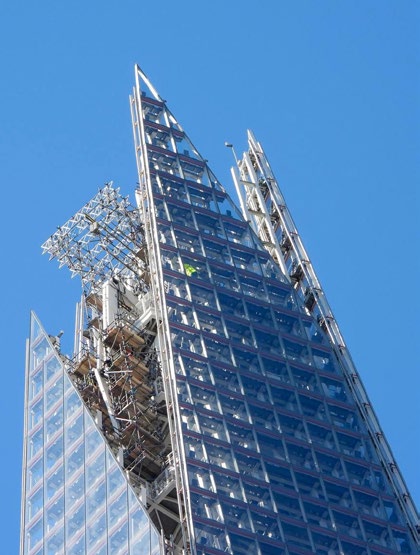
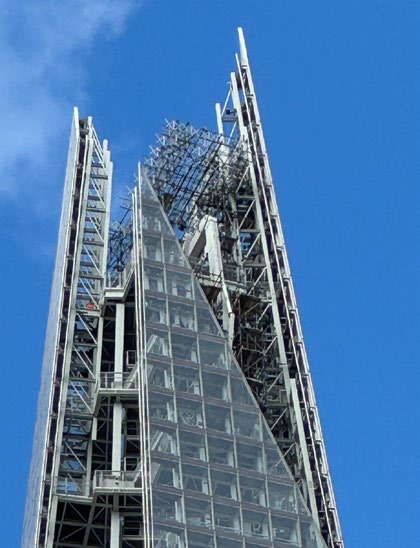
Scaffolding perfection - 87 floors up
Project summary
Contractor: Proplant Scaffolding Ltd Project: The Shard, Level 87, replacement of two-tonne Hydraulic cylinders Client: Alimak Group UK Ltd Project Duration: October 2024 – December 2024
Project Background
Proplant Scaffolding’s initial involvement with Alimak Group began in October 2022, with early discussions focused on replacing the two-tonne hydraulic cylinders of the Building Maintenance Unit (BMU) at Level 87 of The Shard, the tallest building in Western Europe. The client required the construction of a bespoke two-tonne lifting gantry from Level 87 up to Level 91, where the BMU is located, a cantilevered access scaffold from Level 81 to Level 87 to allow access to the BMU’s hanging arm, and a lifting beam at Level 91 to transfer the cylinders from Level 72 to Level 91.
Design and Planning
Following the initial site visit, Proplant established the client’s requirements and arranged a subsequent visit with Node Group Ltd - the preferred scaffold engineers - to produce a preliminary design for client review. A complete 3D design was provided, allowing the client to fully interpret the proposal. Numerous meetings were then held with Alimak and key stakeholders from The Shard to scrutinise every detail and ensure all aspects were achievable. The project received final approval in September 2024, with work commencing the following month.
Technical Challenges
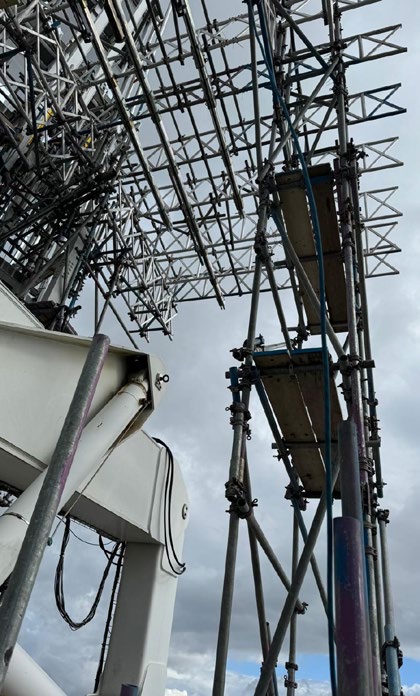
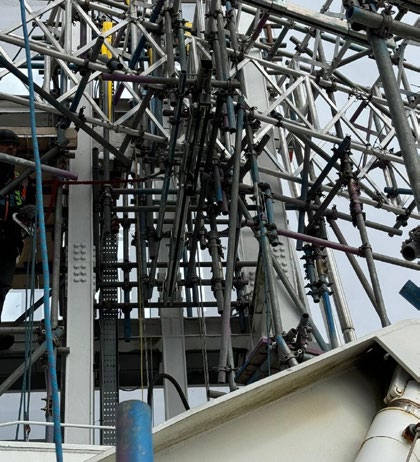
The project presented various challenges due to the work location and the scaffold loadings required. The main lifting gantry at Level 87 could not be based out directly on the building’s steel frame because of restricted loading. Instead, the structure was supported by the existing BMU steels, which could accommodate the necessary loads. Proplant introduced 780mm alloy beams to span the BMU support frame, forming scaffold towers up to six metres high, and used spin beams at high level to connect the scaffold towers.
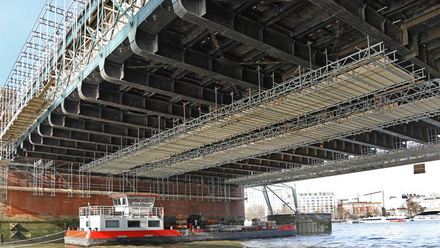
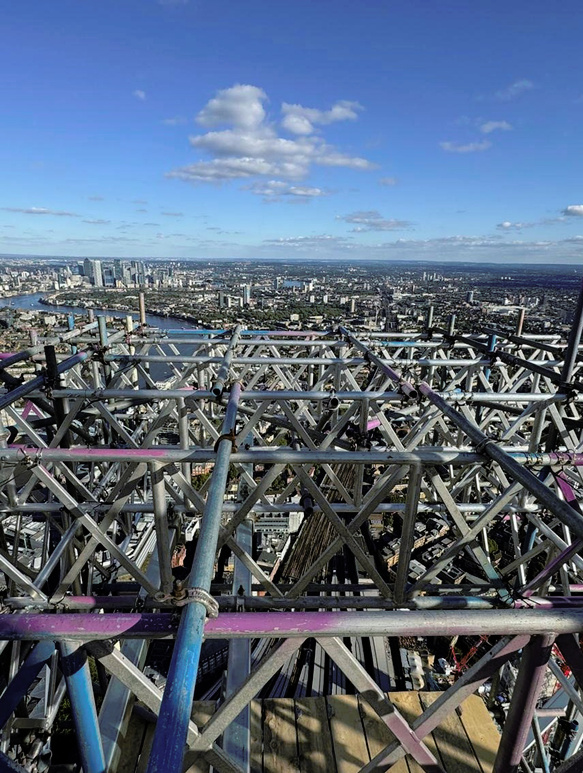
This allowed the installation of further 780mm alloy beams and ensured overall structural integrity. A temporary platform was installed on the top lift for the safe installation of the connecting beams and Type 27 Niko tracks with T24 double load trolleys. The Niko track was designed to cantilever over the building’s side, providing access to the hanging arm section. Access towers were built to each side of the BMU’s hanging arm for cylinder removal, with cantilevered beams extending from Level 81 over the building’s side - constructed above London Bridge railway.
Safety Innovations
Given the high-risk environment - working at roughly 310 metres above ground and over public areas - all materials were required to be tethered before final fixing. Fittings included double washers for carabiner attachment, ensuring each component was secured with a light line during lifting and positioning. Scaffold boards were drilled at each end for carabiner connections and were tied down with board clips. For Niko rails, which originally lacked tethering points, rings were welded on by a steel fabricator to facilitate safe handling.
The team proactively decided against using impact drills, opting for spanners only to mitigate the risk of nuts detaching during dismantling.
Logistics
Logistics posed significant challenges. The lifts available were passenger-sized, limiting material lengths to 7ft and necessitating spliced scaffold joints, increasing risk and the need for tethering. Bespoke trolleys were designed and fabricated to move materials efficiently through the restricted lift routes. All deliveries were scheduled at night when the building was least occupied, with materials transported through viewing galleries and a complex sequence of lifts and staircases - from the loading bay to Level B3, then Level 33, Level 67, Level 78, and finally up the stairs to Level 87.
Stored materials were secured to guard against high winds, and weather conditions were closely monitored with a wind monitor and regular forecasts. The on-site team maintained hourly radio contact with The Shard’s operations team for updates on weather and project status.
Project Delivery
The programme allowed four weeks for material loadout and three weeks for scaffold installation, handover, dismantling and clearance. The team completed these phases efficiently and without issue, meeting and exceeding the original design, budget and schedule requirements. The project’s key stakeholders expressed their satisfaction with Proplant’s conduct and performance, leading to Proplant being specified as the preferred scaffolding contractor for future works at The Shard.
We were responsible for the supply and replacement of four up-to-two tonne hydraulic cylinders on the Building Maintenance Unit at Level 87 of The Shard, the tallest building in Western Europe, and we subcontracted Proplant Scaffolding Ltd for all scaffolding requirements. Proplant’s contribution was a cornerstone of the project’s success.
Proplant’s design input and engineering solutions were pivotal. They didn’t just build to a specification; they actively contributed to a workable and safe methodology for the entire cylinder replacement operation.
Proplant’s operational delivery was also exceptional. Their commitment to safety was evident throughout the project, which was completed without incident. They were remarkably reactive and diligent, often providing on-site support the same day when on-site alterations or additional platforms were required to maintain project progress. Proplant’s team were also excellent communicators. They offered invaluable advice, collaborated seamlessly with initially our sales team and then our project management team, and were always proactive in their approach.