SEVEN COUNTRIES, SEVEN WAYS TO TRAIN A SCAFFOLDER
How do you turn someone with no experience into a competent scaffolder? Last month, seven countries compared their answers.
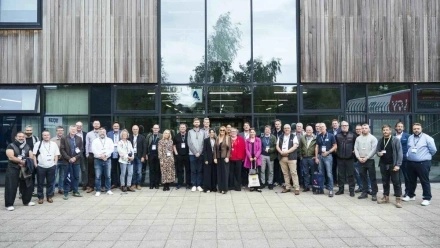
NASC travelled to Dortmund for the Union Europäischer Gerüstbaubetriebe (Union of European Scaffolding Companies) international trainee exchange, joining representatives, apprentices and trainees from Greece, Norway, Germany, Switzerland, Poland and Sweden to look at how different countries approach scaffolding training, qualifications and workforce development.
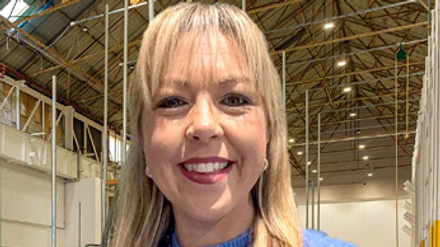
Representing the UK were Rebekah Jardine, Careers Executive at NASC, and Caden Trent, a Part 1b qualified apprentice scaffolder with IBN Scaffold Access Ltd.
Comparing systems
The exchange opened with each country presenting its own training system, qualification pathways and approach to developing the next generation.
Hearing seven different answers to the same question showed up both the differences and how much is shared. Delegates then toured the Dortmund Training Centre, before a group dinner gave everyone a chance to compare notes less formally.
Innovation, and a Christmas tree
Friday began at Scafom-Rux with a presentation and tour of the warehouse facilities, looking at how different scaffolding systems are developed, distributed and applied.
Delegates were also shown the scaffolding structure behind the Christmas tree at Dortmund’s Christmas Market, a reminder that the trade turns up in places most people never think about.
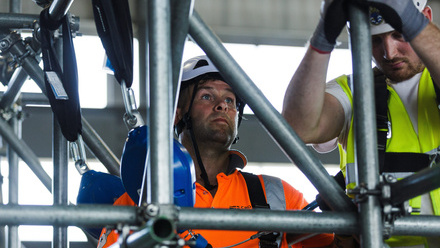
The afternoon moved to the practical. Apprentices and trainees from every country were given a design by Florian Palmer, Head of the Training Centre, and tasked with building a scaffold using the Layher system, interpreting the drawings and working together to complete it.
Caden was paired with Erik, an apprentice from Sweden. Two young scaffolders trained under completely different national frameworks, working from the same drawing, and it went up.
That turned out to be the clearest demonstration of the week. People trained through entirely different pathways can collaborate effectively towards a shared objective.
Cologne Cathedral
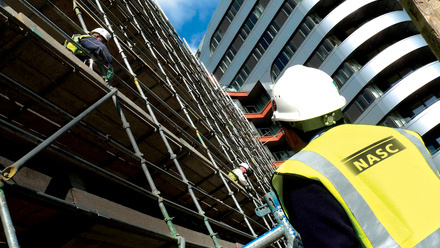
Saturday took the group to Cologne Cathedral, where the long-term restoration and conservation work is supported by genuinely complex scaffolding.
Seeing carefully planned access solutions on a building of that age and significance is a lesson apprentices cannot get on a standard site. A TimeRide virtual reality experience through the history of Cologne followed, and the exchange closed with a dinner and certificate presentation.
What came out of it
For NASC, the exchange was a chance to see how other countries handle training and workforce development, and to find both the shared challenges and the alternative approaches worth considering.
For the apprentices, it went beyond technical skills. Working alongside international counterparts built communication, teamwork, adaptability and confidence, and exposed them to systems and methods they would not otherwise meet.
Rebekah Jardine said: “Although our training systems and qualification pathways may differ, it was clear that we share many of the same priorities, particularly when it comes to attracting new entrants, developing technical skills and ensuring the next generation of scaffolders receives high-quality training.
“One of the highlights for me was seeing the apprentices work together during the practical challenge. Watching Caden and Erik, who have been trained in different countries, collaborate to complete the same task really demonstrated how scaffolding skills can bring people together, regardless of language or background. Caden was an absolute credit to IBN Scaffolding and represented UK talent perfectly”.
“I hope opportunities like this continue to develop, giving more young people the chance to experience the industry from an international perspective and recognise the opportunities a career in scaffolding can offer.”