Industry view: meeting the next generation where they are
Joanne Walker is Scaffolding Manager at the CWIC Academy, part of the University of Wales Trinity Saint David’s Construction Wales Innovation Centre. Here she sets out what it will actually take to bring a new generation of scaffolders into the industry.
If we want to bring the next generation into scaffolding, we have to meet them where they are. We cannot keep talking about a skills shortage without considering the people we are not attracting, and asking why.
People who come to the Academy now generally know they either want to work in scaffolding or are already in the industry and looking to develop their skills. But what about everyone else? As a governor at a local school, I see that pupils are familiar with trades such as bricklaying, but scaffolding barely registers. It is rarely considered a viable career option. That is where we need to start.
Be where they are
One of the advantages of being part of the University of Wales Trinity Saint David is being able to engage people in different ways, including using virtual reality, artificial intelligence and drones, which can all play a role in making learning more engaging and accessible.
Social media also has an important role to play. Young people are on TikTok, so that is where we need to be. The nation’s 12 to 16-year-olds are not spending their time on LinkedIn, so there is little value in focusing our efforts there. When I started using TikTok, I was regularly achieving more than 10,000 views. It provides a direct route to raising awareness among audiences we might not otherwise reach.
Make it memorable
We also need to think carefully about what we offer young people when we engage with them, and how we present the industry. For school pupils and those with little knowledge of scaffolding, that means moving beyond endless presentations and creating something meaningful and memorable.
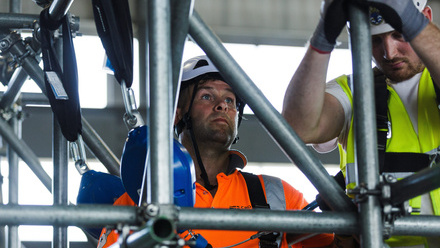
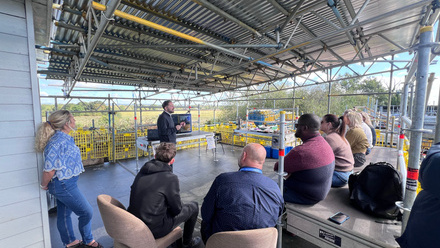
When pupils visit the Academy, we give them a practical insight into the industry. That does not mean climbing scaffolding, but it does mean putting on the equipment and experiencing the environment in a safe and immersive way. Many will take photographs, share them with family and friends, or post them on social media. Those experiences help build awareness and create advocates who share their positive impressions with others.
We have also developed miniature scaffolding models that allow participants to safely build structures, interpret drawings and develop teamwork and communication skills. Activities such as these demonstrate that scaffolding is not simply a manual trade. It requires technical knowledge, planning, problem-solving and collaboration.
I also try to explain that there is a whole world of opportunities beyond becoming a scaffolder. The industry requires inspectors, supervisors, trainers, managers and a range of other specialists. For many people, it can open the door to careers they may never have considered possible.
Start earlier
Above all, we need to engage with young people earlier. By Years 10 and 11, many key decisions have already been made. Even in Year 9, pupils are beginning to choose GCSE subjects that may influence future career pathways. Whether through school engagement, practical experiences or social media, we need to plant the seed before those decisions are made.
If we want to secure the future of our industry, we cannot wait until young people leave school to tell them about scaffolding. We need to raise awareness earlier, challenge misconceptions and showcase the breadth of opportunities available now.