Loaded with risk
According to the Health and Safety Executive (HSE), every year, around 50 people are killed and more than 5,000 are injured in accidents involving workplace transport. The most common causes are people falling from or being struck by a vehicle, objects falling from a vehicle or vehicles overturning.
Initiatives such as Driving for Better Business offer practical solutions to improve compliance, reduce collisions, and protect reputations. Simon Turner, Engagement Manager at Driving for Better Business, explains: “Scaffolding contractors operate in a high-risk environment, expertly managing complex site risks, but road safety is often overshadowed by the demands of site work, tight schedules and complex logistics. The risks associated with transporting scaffolding materials, often on large, heavily loaded vehicles, are substantial. Poor load security, inadequate driver training and inconsistent vehicle checks can lead to serious incidents, enforcement action and reputational damage.”
Turner lays out the key road risk challenges facing scaffolding firms and how practical support from Driving for Better Business can help address them.
Load Security and Vehicle Compliance
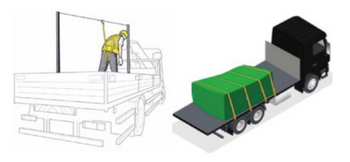
Scaffolding loads are inherently awkward with long tubes, heavy boards and irregular components that require precise loading and securing. Poorly restrained loads can shift during transit, causing collisions or shedding items onto the road or into oncoming traffic. Enforcement agencies actively target scaffolding vehicles due to the high risk of non-compliance.
Time Pressure and Fatigue
Scaffolders often work long hours, starting early and travelling between multiple sites. This increases the risk of fatigue-related incidents, especially if drivers are rushing to meet deadlines or skipping rest breaks. Fatigue impairs reaction times, decision-making and concentration, all critical factors when operating large vehicles in urban environments.
Inadequate Vehicle Checks and Maintenance
Daily walkaround checks are a legal requirement, but in practice may be compromised under time constraints. Defects such as worn tyres, faulty lights, or loose restraints can lead to breakdowns, collisions or enforcement action. Many scaffolding firms lack robust systems for defect reporting and follow-up, leaving vehicles on the road in an unsafe condition.
Lack of Formal Road Risk Management
Unlike larger logistics firms, many scaffolding contractors may not have access to dedicated fleet management, making structured support especially valuable. This leads to inconsistent or unsafe practices, poor recordkeeping, and reactive rather than proactive safety management.
About DfBB
Driving for Better Business (DfBB) is a government-backed programme that helps employers manage work-related road risk more effectively. For scaffolding contractors, it offers a structured, accessible way to improve safety, compliance and efficiency. DfBB provides free toolkits, policy templates and guidance documents designed for small and medium-sized businesses. Scaffolding firms can use these to build or improve their road risk management systems without needing specialist knowledge or expensive consultants.
Contractors can assess their current practices using DfBB’s risk management gap analysis to help prioritise improvements and demonstrate commitment to safety to clients, insurers and regulators.
DfBB shares real-world examples of companies that have improved safety and reduced costs through better road risk management, showing that change is achievable and beneficial, even for smaller operators. The organisation also emphasises the role of leadership in setting safety standards. For scaffolding firms, this means directors and supervisors taking ownership of road risk, embedding safe practices into daily operations, and recognising good driving behaviour.
DfBB’s resources help contractors stay compliant with key legislation such as the Health and Safety at Work Act and the Road Traffic Act. This reduces the risk of enforcement action and supports a proactive safety culture.
The Business Case
Improving road risk management isn’t just about avoiding fines – it’s about protecting people, assets and reputation. Scaffolding contractors who invest in driver safety see fewer collisions, lower insurance premiums, reduced downtime and improved client confidence. Driving for Better Business helps contractors make that leap. By embedding road safety into their operations, scaffolding firms can safeguard their teams, meet legal obligations and demonstrate leadership in a high-risk sector. Have a look at DfBB’s free Driving for Work Policy Builder templates.
SG30: the definitive guidance
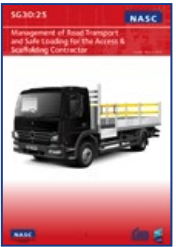
NASC has produced a definitive guidance document in SG30:25 Management of Road Transport and Safe Loading for the Access & Scaffolding Contractor. Over 39 pages, the newly revised SG30 guidance provides advice for employers on what they need to do to comply with the law and reduce risk. It is also useful for the responsible person (eg transport manager), managers, supervisors, employees and their safety representatives, as well as contractors, vehicle operators and other organisations concerned with transport workplace transport safety. The guidance covers the following:
- Operator’s licence requirements
- Company and responsible person competency
- Driver roles and responsibility
- Working from vehicles
- Securing of loads, and safe loading and unloading of vehicles
- Movement of vehicles on site
- Use of digital tachograph machines
- Prevention of theft and terrorism
Appendices cover key areas such as convictions that must be declared, an example vehicle defect report form, guidance on safety inspection intervals, a maintenance planner, an example safety inspection record, an example maintenance agreement, guidance of safe unloading/loading of scaffolding vehicles on public roads, and job description templates.
This article first appeared in the November/December issue of Scaffolding Insider. See the latest issue.