Day in the life of a Scaffolder- Adam Wells
1. About Me
How did you get into Scaffolding?
What inspired you to choose this career?
2. A Typical Day
What time do you usually start work?
What does a normal working day look like for you?
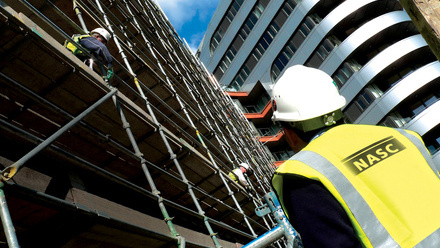
My working day has changed a lot over my time in scaffolding. When I started in the yard, it was lots of sorting and maintaining equipment, asking questions where I could to figure out what everything was. That quickly changed to labouring on site once I completed my COTS course and obtained my labourers card. Carrying materials, pulling up on the rope and supporting the scaffolders where I could while learning.
Shortly after, I completed my Part 1 course. From there on it was steady for a while, turn up to site, get shown the latest job by the supervisor and work under another scaffolder, following their lead and learning how to put up various types of scaffolding. This progressed to working alongside larger groups with more autonomy and occasionally leading my own small team once I had passed my final assessment.
Eventually I was offered the opportunity to supervise the scaffolding operations for one of our long-term sites. This was quite a departure from what I was used to, as the role was mostly non-working. Writing lists of materials to order, planning works, attending site meetings and dealing with the daily problems that arise on site replaced putting up scaffolding (and the early finishes!).
Now working at the NASC, the pace might have slowed a little from being on site, but the expectations and quality required is higher than ever. Reviewing guidance documents, answering queries from people across the industry, and supporting the wider Technical team keep me busy. The detailed nature of the work, along with the various ad-hoc projects undertaken, certainly make this the most interesting job I’ve ever had.
What are your main tasks/responsibilities?
As a supervisor, there were two main responsibilities. Helping to deliver the project on time by making sure the scaffolding operations ran smoothly and ensuring that everyone worked safely and went home in one piece that evening.
Currently, at the NASC, it mostly boils down to being part of the team of industry experts. We assist the other teams within NASC with scaffolding specific knowledge, and work on improving industry standards and safe working practices.
Do you work mainly in teams or individually?
3. Highlights of the Job
What do you enjoy most about scaffolding?
What’s the most interesting or memorable project you’ve worked on?
4. Challenges
What are some of the tough parts of the job?
Working at NASC is a different set of challenges. Meetings, project deadlines and events add up to a full schedule. Working on the tools is tough but at least it tends to be one job at a time. Juggling multiple pieces of work at once can leave you not knowing whether you’re coming or going at times.
How do you handle them?
In my current role at NASC, it took a little time to adjust. Having to stop working on something to attend a meeting or drop a project to move onto something more important can feel strange when you’re used to finishing a job before starting the next. If you ever feel out of your depth at a new job, take notes, plan your calendar accordingly and never be afraid to ask questions. Don’t rely on post-it notes though, this is the 21st century.
5. Skills & Training
What skills are important in your role?
For those looking to move onto other roles in construction, it’s important to branch out into other skills besides those you develop on the tools. IT / Computer, organisational and communication skills are things you may not have the chance to develop on site but will make any transition into an office-based role easier.
What training or qualifications have you done (CISRS, apprenticeships, etc.)?
Before supervising, I completed the CITB Site Supervision Safety Training Scheme (SSSTS), which gives an understanding of H&S law, supervisor responsibilities, risk assessments, inductions, etc.
While progressing through construction I studied H&S and achieved my NEBOSH Health and Safety Management for Construction certificate.
During my time at NASC I have been fortunate enough to undertake Emergency First Aid at Work, Mental Health: Workplace First Aider and Fire Marshal training. I am also an SSIP Assessor since passing the SSIP training course.
6. Advice for Others
What would you say to someone thinking about a career in scaffolding?
If you ever want to move on to another role, within scaffolding or to another industry entirely, the skills and confidence you develop will help wherever you go.
Any tips for young people or career changers?
For career changers, don’t stress too much about it, give it a try. I’ve changed careers three times already in my working life and yes, the first time brought lots of anxiety and worry. Eventually I took the plunge and…everything was fine! If you’re yet to find the career for you, give scaffolding a try.