GKR Scaffolding at Brettenham House
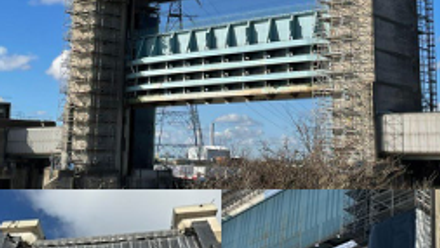
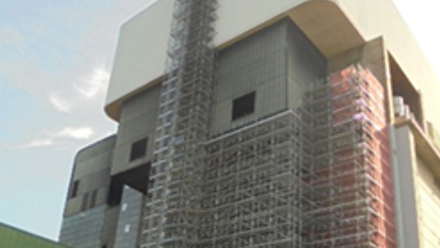
Occupying a prime location on the elbow of the River Thames, Brettenham House is a striking example of Art Deco architecture, built in the early 1930s. When plans were drawn up to convert it into an iconic, sustainable landmark office building, GKR Scaffolding was brought in to provide a temporary access solution across the project, as well as environmental containment through a complex temporary roof structure.
Working in an extremely densely occupied space on Savoy Street presented immediate challenges. Maintaining safe access and egress at all times was non-negotiable, while the volume of temporary works required meant extensive planning from the very start. When engaging at tender stage, GKR foresaw the risks that had to be taken into account — the narrow logistical constraints of Savoy Street, loadings upon a heritage building and the management of pedestrian footfall in a densely populated area.
Early engagement was key. GKR partnered with McLaren Construction from the outset, and to improve programme accuracy and make it easier to identify and discuss issues with stakeholders, the team developed task video analysis mock-ups before construction began. This allowed them to virtually deliver the product and present their vision, requiring extensive pre-planning from the whole leadership team.
For a project of this scale, innovation was essential. A 100% tool tethering policy was implemented across the project, as well as material tethering when working over Waterloo Bridge, including the use of the Elimin-8 tethered scaffold fitting. Eliminating the risk of falling materials from height not only gave McLaren peace of mind but significantly reduced the level of risk to scaffolding operatives working below.
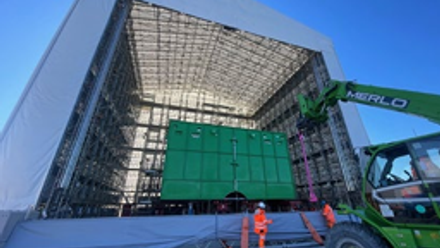
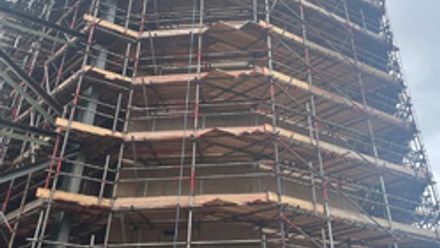
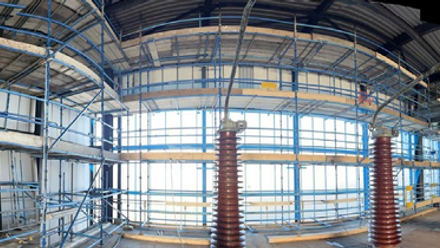
The scope of works tells its own story: 8,200m² of independent scaffold and 4.2km of platforming; an 80m cantilevered 10kN gantry spanning Savoy Street to support hoist logistics and site access; two 2,000kg cantilevered beam hoists; and a 2,200m² temporary roof, constructed entirely by hand given the limited space and mechanical constraints on site.
The project required 11,520 operative hours to erect the complete structure — and was completed with no lost time injuries. GKR also collaborated with McLaren on an occupational health initiative, employing a hygienist to conduct noise surveys throughout the project with scaffolders equipped with dosimeters. The result was a detailed understanding of noise exposure levels on site and where the key risk points lay.
It is the kind of work that demands not just technical skill but genuine innovation, meticulous planning and an unwavering commitment to safety. GKR Scaffolding delivered all three.