No space? No problem: Inner City Scaffolding at Parkside Court
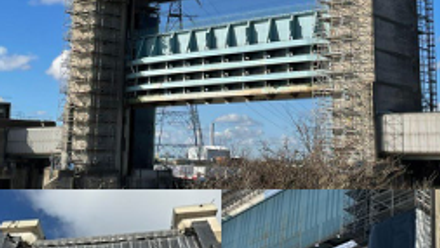
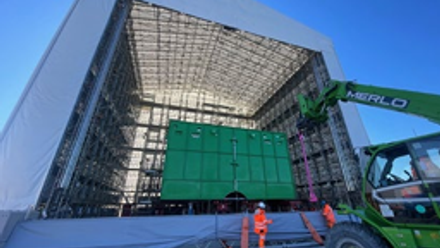
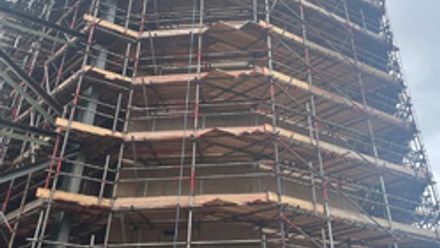
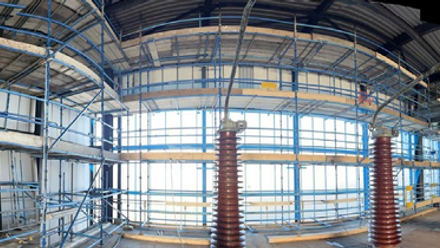
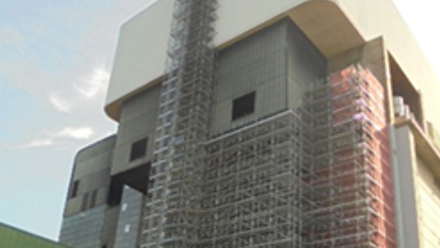
Inner City Scaffolding was tasked with developing a complex and innovative solution to provide safe access for a monumental recladding project on a live building. This involved creating a large-scale, engineered HAKI System scaffolding for the main building, reaching up to a 40m roof level, and integrating steel shore and triple bank 1300mm HD Spine Beams.
Safety and compliance were top priorities. Inner City implemented the HAKI System scaffolding with an external HAKI access stair tower, allowing the site team to use the HAKI Advanced Guard Rail for collective fall protection, significantly reducing the time spent working at height. Where practical, beam work positioning was carefully coordinated to allow safe installation from existing roofs, protected with Temporary Edge Protection solutions in line with NASC technical guidance TG1.
This pre-planned approach minimised manual handling during the erection and dismantling process, particularly given that no crane use was available for any part of the project. Due to the lack of foundation support from the building, Inner City devised a groundbreaking approach that involved transferring loads to minimal areas including the building's steel frame. This required scaffolding service loads to be transferred onto engineered beam work arrangements, with spans between supports exceeding 25 metres, attached to purpose-built steel shores linked to the building's core steel structure.
The project involved approximately 4,000m² of FR netted external facade scaffolding, requiring 600 individual support legs and 1,000 linear metres of HD Asterix Beams, X-Beams and Ladder Beams. The project required 160,000kg of materials to be delivered and erected on schedule; all while maintaining constant due diligence towards residents, a functioning NHS centre and busy traffic routes on all elevations.
The use of the HAKI system significantly reduced the need for timber scaffold boards, lowering the project's environmental footprint and minimising fire risk with non-flammable materials. The debris netting was compliant with TS62 testing and certification, ensuring fire risks were adequately controlled. Early concerns about the inclusion of monoflex sheeting were addressed by redesigning it with debris netting, allowing natural light into the building for the project's 18-month duration.
There was also a strong emphasis on maintaining clear and uninterrupted access to the NHS centre throughout. Beam work sections were specially designed and positioned to avoid any impact, and logistical deliveries were stringently planned with the customer to avoid busy times and high footfall areas, with daily meetings held to plan the delivery and collection of materials. Despite the project's complexity, it was delivered on time.
This project is an example of exactly the kind of work that rarely makes the headlines but represents everything that sets professional, accredited scaffolding contractors apart.